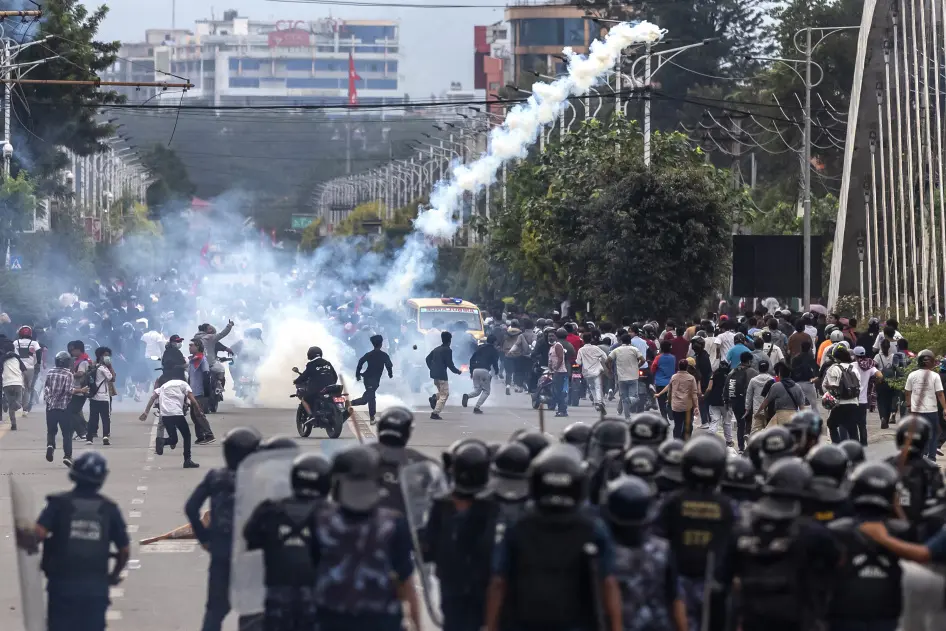
This article is written from the author's direct involvement in Nepal’s 2025–26 Gen Z protests as a member of the Gen Z Movement Alliance, providing an insider view of the youth uprising against corruption and political stagnation. It explores how the movement’s decentralized pressure enabled the rise of figures like Balendra Shah and reflects on the difficult shift from street protests to state governance.
From the Streets to the State
This article is not written from a distance—it emerges from lived political participation. As a member of the Gen Z Movement Alliance, I was directly involved in the protests that unfolded across Nepal during 2025–26. From the early days of mobilization on the streets to the evolving political developments leading up to the election, my engagement was both active and continuous.
This positionality matters. The Gen Z protests were not simply political events observed from afar—they were experienced, negotiated, and shaped by those within them. Participation provided firsthand insight into the motivations, frustrations, and aspirations that drove thousands of young people to challenge Nepal’s entrenched political order.
The movement itself was rooted in a deep sense of disillusionment. Issues such as unemployment, corruption, and the recycling of political leadership created a growing disconnect between the state and its younger citizens. What began as scattered expressions of frustration gradually coalesced into a coordinated, youth-led mobilization that questioned not only policies, but the legitimacy of the existing political structure.
Through direct involvement, it became evident that the protests were not leaderless, but differently led—organized through decentralized networks, digital platforms, and collective action rather than traditional party hierarchies. This shift in political organization played a critical role in enabling new figures to emerge outside established systems.
The rise of Balendra Shah must be understood within this broader context. His political ascent did not occur in isolation; it was made possible by the conditions created through sustained public pressure, youth mobilization, and a redefinition of political legitimacy. As someone who witnessed this transition unfold in real time, it is clear that his leadership represents both the outcome of the movement and a test of its long-term impact.
This research, therefore, combines experiential insight with broader political analysis. It draws not only on observation and participation, but also on reflection—on how movements translate into governance, and how street-level demands are negotiated within state institutions.
At the same time, this perspective requires critical distance. While participation offers depth, it also necessitates careful examination of biases, limitations, and the gap between movement ideals and political realities. The transition from protest to power is rarely linear, and the expectations placed on leaders emerging from such movements are often shaped by the intensity of the struggles that produced them.
By situating this article within both lived experience and analytical inquiry, the aim is to explore not just the rise of a political figure, but the transformation of a political moment—one that continues to redefine Nepal’s democratic trajectory.
Written by
Siya Pokharel
Journalist · Kathmandu