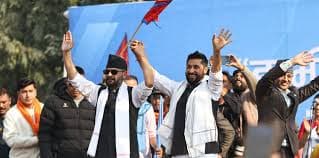
Nepal’s upcoming elections reveal widespread frustration with both traditional parties like the Nepali Congress and newer forces like the Rastriya Swatantra Party. While old parties are blamed for corruption and failure, new ones lack clear plans, leaving doubts about real change without deeper reform.
In the chilling grip of political winter, Nepal's established parties huddle around the fleeting warmth of upcoming elections, much like farmers seeking solace from the sun after ravaging their own fertile fields. For decades, the ideological heartlands of these old guards parties like the Nepali Congress, CPN-UML, and Maoist Centre have been poisoned with the pesticides of corruption, nepotism, and endless power games, turning once-vibrant promises of democracy and prosperity into desolate wastelands. These leaders, now compelled to either abandon their barren plots or toil futilely upon them, face an electorate weary of recycled failures. Meanwhile, on the horizon, a monsoon of youthful discontent swells, luring new players eager to transplant hasty ambitions without digging canals or damming sources assuming the chaotic floodwaters will naturally irrigate their fields. Yet, as we survey this landscape ahead of the March 5, 2026, House of Representatives elections, one truth emerges starkly: without deliberate cultivation, no harvest will thrive neither the old nor the new.This metaphor, drawn from Nepal's agrarian roots, encapsulates the nation's precarious political moment. Triggered by a seismic Gen Z uprising in September 2025, which toppled the coalition government led by Prime Minister KP Sharma Oli amid widespread protests against corruption and economic stagnation, the country now hurtles toward early polls under an interim administration headed by former Chief Justice Sushila Karki. With 18.9 million registered voters bolstered by a surge in youth registrations and 114 parties vying for 275 seats (165 directly elected, 110 via proportional representation), the stage is set for a contest that could either rejuvenate Nepal's democracy or perpetuate its cycles of instability. But a critical examination reveals deep flaws in both the entrenched establishment and the emergent challengers, suggesting that superficial changes may yield only thorny weeds.
The Old Guards: Architects of Their Own Barrenness
Nepal's traditional parties have dominated since the 1990 restoration of multiparty democracy, but their legacy is one of squandered potential. The Nepali Congress, under leaders like Sher Bahadur Deuba who has already signaled his party's readiness for the fray embodies liberal ideals but has been mired in patronage networks and ineffective governance. Similarly, the communist factions, including the CPN-UML and Maoist Centre, rose on promises of social equity post-2006 peace accords but devolved into infighting and elite capture. Over the past two decades, Nepal has seen 13 governments, with coalitions collapsing under the weight of personal ambitions rather than policy failures.
Critically, these parties have "chemicalized" the fertile soil of ideology with systemic corruption. Transparency International ranks Nepal poorly, with scandals like the fake Bhutanese refugee scam and gold smuggling implicating top leaders across the spectrum. Economic growth hovers at a dismal 3-4% annually, far below regional peers, while youth unemployment drives mass emigration over 1,500 Nepalis leave daily for foreign jobs, remitting billions but hollowing out the domestic workforce. Infrastructure projects, such as the Melamchi water supply or Gautam Buddha International Airport, languish in delays and cost overruns, emblematic of bureaucratic inertia and kickbacks.
In the 2026 race, these old players are forced to "farm the barren land." The Nepali Congress has begun internal preparations, but notable absences like General Secretary Bishwa Prakash Sharma opting out hint at internal fractures. The communists, including the Nepali Communist Party recommending candidates in key constituencies like Rupandehi, cling to outdated Marxist rhetoric while cozying up to foreign powers for survival. Their response to the Gen Z protests? Token concessions, such as anti-corruption probes, but no structural reforms. This reluctance to innovate leaves them vulnerable, as voter trends show declining turnout from 78% in some past federal polls to potential apathy among disillusioned youth.
Politically incorrect as it may be, these leaders many in their 70s and 80s represent a gerontocracy that prioritizes self-preservation over national renewal. They've migrated from revolutionary ideals to rent-seeking, leaving the ideological terrain infertile for genuine progress.
The New Challengers: Riding the Flood Without Building Dams
Enter the monsoon opportunists: emergent forces like the Rastriya Swatantra Party (RSP) and its high-profile alliance with Kathmandu Mayor Balendra Shah (popularly known as Balen). Born from the 2022 elections where RSP captured urban youth votes with anti-corruption pledges, the party now positions itself as the vanguard of change. Balen, a former rapper turned mayor, has declared his prime ministerial candidacy, backed by RSP chairperson Rabi Lamichhane, promising to address youth demands for jobs, education, and climate action.
This alliance taps into the Gen Z uprising's energy, which mobilized thousands via social media against elite impunity and economic despair. With fresh voter registrations surging especially among first-timers prioritizing employment and environmental issues these "new players" assume the flood of discontent will carry them to power without the hard work of institution-building. RSP has finalized proportional lists and is campaigning on populist themes, but critics point to a lack of depth: Balen's tenure as mayor has been marked by bold actions like bulldozing illegal structures, yet systemic issues like Kathmandu's waste management and traffic persist unresolved.
In-depth scrutiny reveals opportunism over substance. RSP's rapid rise mirrors global populist trends, but without robust policy frameworks such as detailed plans for economic diversification beyond remittances or hydropower it risks becoming another flash flood that erodes rather than nourishes. Balen's anti-India rhetoric, while resonating with nationalists, ignores Nepal's economic dependencies and could exacerbate geopolitical tensions with India and China, both vying for influence amid the uprising. Moreover, the Election Commission's directives for 33% female candidates highlight progress, but new parties like RSP have been slow to embody this, with male-dominated leaderships.
These newcomers, impatient to "plant as much as possible" in the current deluge, overlook the need for "new canals" reforms like electoral law updates (still pending despite calls) or anti-corruption institutions with teeth. Their assumption that momentum alone will deliver water to the fields is naive; without damming sources of inequality, their harvests may wither post-election.
A Harvest Doomed? Key Issues and the Path Forward
Observing this tableau, it's evident that neither camp is poised for success. Core issues rampant corruption, youth exodus, gender disparities, and foreign meddling demand more than rhetoric. Voter behavior trends underscore this: While youth participation rises, gender patterns show women increasingly influential under proportional systems, yet overall turnout fluctuations signal cynicism.
Critically, the elections under old laws risk perpetuating fragmentation, with 10,967 polling stations and spending limits enforced but easily circumvented. Geopolitical dynamics add volatility: India's infrastructure investments clash with China's Belt and Road ambitions, potentially swaying outcomes through covert support.
For a bountiful yield, Nepal needs ideological rejuvenation old parties must purge corruption, new ones build sustainable platforms. Voters, empowered by the uprising, must demand accountability. Otherwise, March 2026 may usher in yet another barren cycle, where floods recede to reveal cracked earth, and the nation's aspirations remain unfulfilled. In this electoral winter turning to stormy spring, true warmth lies not in the sun of polls, but in the labor of genuine reform.
Published in